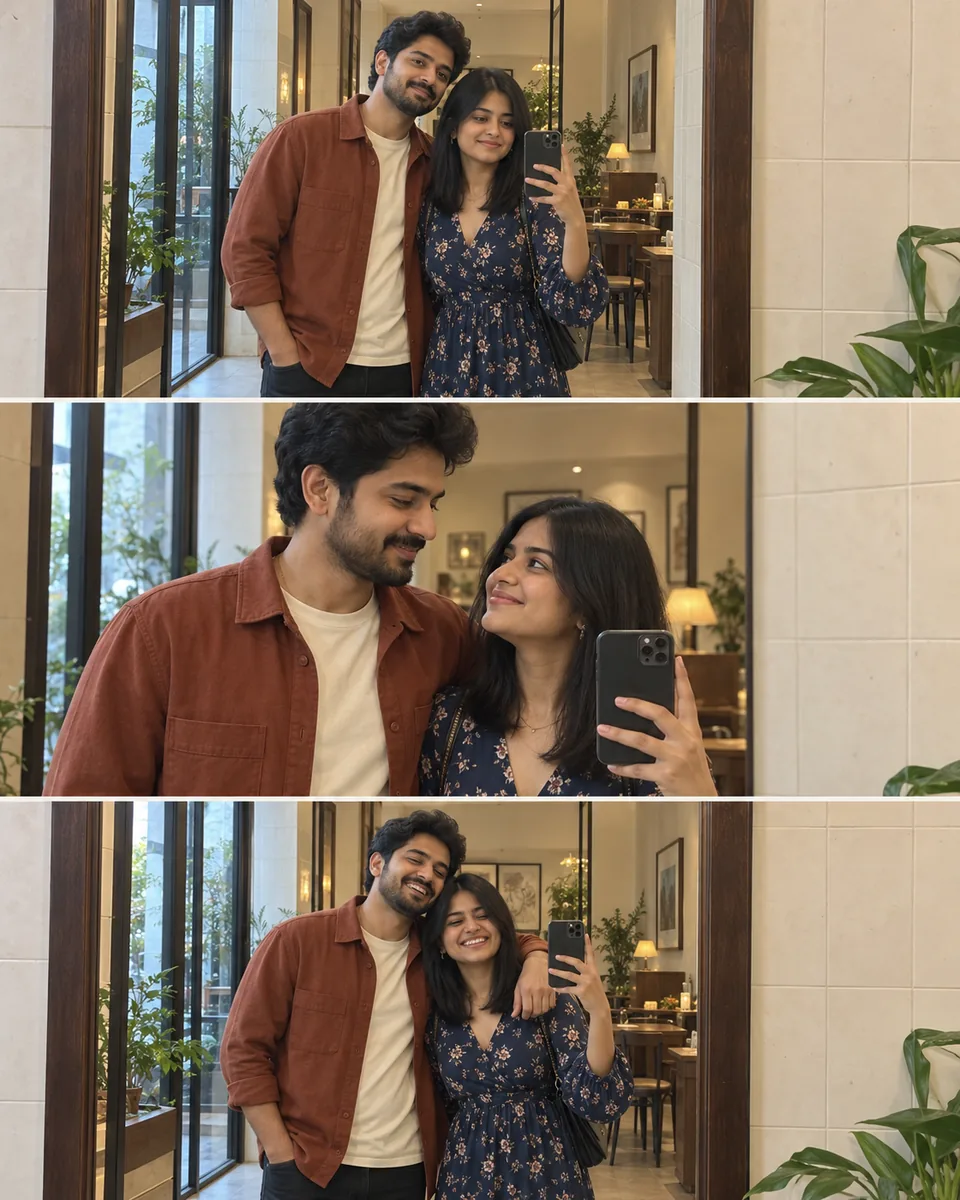
You find a tall mirror on the way out of a cafe. The first photo is calm, the next catches a smile, and the last is the one where you both laugh. This couple mirror selfie collage AI prompt arranges those three moments into a single portrait image.
The example uses fictional adult models and was made with ChatGPT image generation. It demonstrates the scene and composition rather than a real person’s face transformation.
Copy the prompt
Create one vertical 4:5 photographic collage with exactly three equal horizontal panels stacked with thin ivory gutters. Show the SAME adult Indian couple in all panels, with consistent faces, hair, body proportions and clothes. Use attached adult reference photos for their separate identities when supplied; otherwise create original adult models. He wears a rust overshirt over a cream T-shirt. She wears a navy floral long-sleeve midi dress and has straight shoulder-length dark hair. Set every panel in the same cafe lobby with a tall rectangular mirror, cream tiled wall and gentle warm light. Top panel: a wider mirror selfie, woman holding one phone near chest height beside rather than across her face, man smiling beside her. Middle panel: a closer mirror selfie, she looks at him and he smiles back, phone visible at the lower side without blocking faces. Bottom panel: a wider laughing selfie, his arm rests around her shoulders, same phone in her same hand. Show only their reflected view, no extra unreflected couple. Keep one phone per panel, correct grip, separate fingers, natural skin texture and believable reflection geometry. Complete heads in every panel. No text, watermark, duplicated bodies or face changes.Tool used for the example: ChatGPT image generation. Ratio: 4:5 portrait.
Keep the mirror rules simple
A mirror scene can go wrong even when both faces look good. Start with one mirror, one phone and two people. Asking for several reflective walls adds extra copies and makes it harder to see which hands belong to whom.
The phone stays in the same hand across the collage. It sits beside the faces so you can actually compare their likeness. In the example the middle crop is closer, but the wall, outfits and couple still belong to the same visit.
Use the right references
Attach a clear photo of each adult or one shared photo with both faces visible. Label them before pasting the prompt. If one person wears glasses in the reference, say whether to keep them; otherwise small accessories may change between panels.
Generate the entire collage first. If the faces drift, create one good mirror selfie, use that as an additional continuity reference, and ask for the other expressions without changing the clothes or location. Identity consistency is an instruction, not a guarantee.
Check each panel separately
Look at the phone cameras, the hand holding the phone and the arm around the shoulders. Count two people in each reflection. A repeated elbow or an extra phone at the edge can be easy to miss when the collage is small.
If the generator hides a face behind the phone, ask it to move the phone lower and outward while preserving the pose. If the hands look reversed or disconnected, simplify the pose instead of adding more jewellery and props.
If three panels will not stay consistent
Make the top frame first, then request the smiling and laughing versions in the same conversation. Arrange them in a collage editor using equal-width crops. This takes more steps but lets you choose a clean result for each moment.
Avoid cropping the top of a head to force a panel to fit. Leave enough room around both people when creating the source frames. Keep borders thin so the small faces remain readable on a phone.
Using Gemini instead? Google’s official image creation and editing guide explains its image workflow. This exact example was not tested in every generator, so results and controls may differ.
More photo ideas
For a collage without mirrors, try the three-panel coffee-date prompt. For one evening portrait, use the candlelight cafe prompt.
Explore the couple AI photo prompts collection for more complete prompts and examples.